Social Media Management

Introduction to Social Media Management
Social Media Management is going to be one of the most important aspects of digital marketing. It is essential for helping professionals, influencers, and businesses increase their visibility, interact with audiences, and generate income on platforms like Instagram, Facebook, TikTok, LinkedIn, and X (formerly Twitter), which have billions of active users.
Gaining an understanding about this topic involve becoming an expert in content creation, post scheduling, performance analysis, and platform-specific strategy development.
What is Social Media Management?
The process of producing, planning, evaluating, and interacting with content on social media platforms is known as social media management. Building a strong online presence is more important than simply sharing a picture or a video. In a constantly evolving digital landscape, social media management guarantees that brands remain competitive, consistent, and relevant.
Social Media Management’s Significance
As more companies use social media platforms to engage with their clientele, the significance of social media management keeps increasing. Media management is essential for expansion and is no longer be a choice. Businesses can stay ahead of the competition, generate leads and sales, enhance customer engagement, establish enduring relationships with audiences, and raise brand awareness with the aid of effective social media management.
Essential Components of Social Media Administration

Production of Content
The cornerstone of media management is content creation. Attention-grabbing posts, captivating videos, and excellent images all aid in drawing viewers in. Brands need to produce content that appeals to their target audience and fits into their niche. Relatable experiences and compelling narratives increase the shareability and memorability of content.
Planning and Regularity
For social media management to be effective, scheduling is essential. Regular posting boosts trust and engagement. Regular posting schedules increase a brand’s chances of staying visible in users’ feeds. Scheduling is made easier by tools like Later, Hootsuite, and Buffer, but consistency requires a well-defined content calendar and strategy.
Participation and Interaction
Managing social media requires two-way communication. Building trust and loyalty involves answering messages, leaving comments, and having conversations. When their opinions are heard, audiences feel appreciated, which raises the possibility of brand advocacy.
Analytics and Insights
Without performance analysis, no media management plan is complete. Reach, impressions, engagement rate, and conversions are examples of metrics that show what is effective and what requires improvement. Strategies are improved, and ongoing growth is ensured with insights.
Benefits of Social Media Management
A larger audience can see brands thanks to social media management. By sustaining active engagement it contributes to the development of stronger customer relationships. Companies gain from increased revenue as well because tactics like influencer partnerships and focused advertising increase sales. Furthermore, social media management is less expensive than traditional advertising and can still produce significant outcomes on a shoestring.
Strategies for Effective Social Media Management
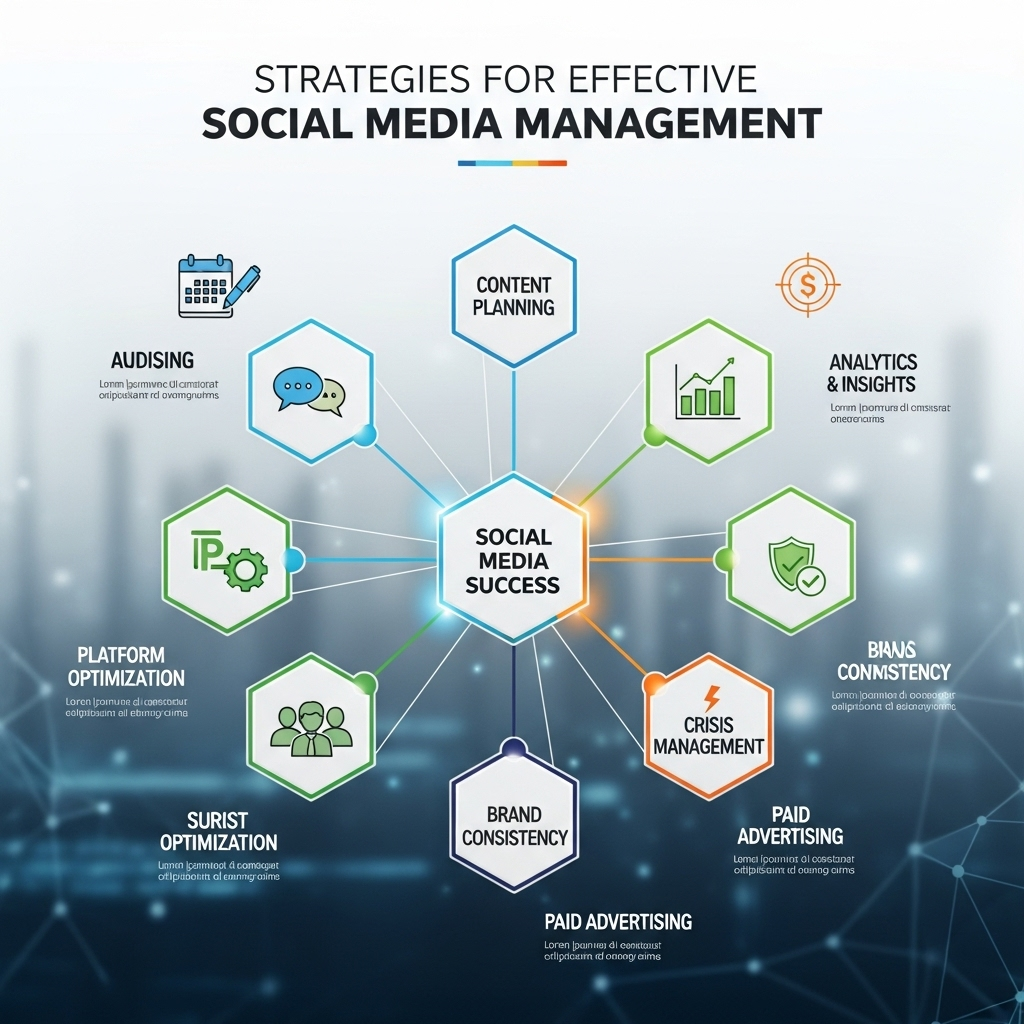
Establish Specific Objectives
Establishing objectives is the first stage in social media management. A brand has to choose between increasing sales, increasing traffic, or increasing awareness. Objectives give guidance and aid in gauging success
Recognize Your Audience
A key component of social media management is audience research. Knowing the age, hobbies, and habits of your followers will help you create content that appeals to them specifically. Even the best content might not accomplish its goal if the audience is unknown
Create a Content Strategy
A solid content strategy is essential to a successful social media management plan. This entails choosing the kind of content to create, the messaging tone, and the posting frequency. Consistent branding across all platforms is guaranteed by a carefully considered approach.
Make Use of Paid Promotion
One effective component of social media management is paid advertising. Reaching new audiences, retargeting interested users, and increasing visibility are all made easier with targeted advertisements. Spending money on advertising allows brands to grow and produce results more quickly.
Collaborate with Influencers
Influencer marketing is currently one of the most popular trends in social media management. Influencer collaborations give brands access to existing communities and allow them to build real relationships with potential customers.
Work Together with Influencers
One of the hottest trends in social media management right now is influencer marketing. Influencer partnerships enable brands to reach current audiences and establish genuine connections with prospective clients.
Make Use of Platform-Specific Features
Comprehending the distinct attributes of every platform is essential for social media management. LinkedIn works best for professional thought leadership, Facebook and X concentrate on community engagement and conversations, TikTok stresses short-form creative videos, Instagram thrives on reels and stories, and so on. Making use of these features optimizes outcomes.
LinkedIn for Professional Growth
LinkedIn is the ideal platform for building authority and sharing thought leadership content. It helps professionals and businesses connect within industry circles.
Facebook and X for Community Engagement
Both Facebook and X (formerly Twitter) excel at fostering conversations, building communities, and maintaining ongoing engagement with followers.
TikTok for Creative Short-Form Content
TikTok emphasizes creativity through short, engaging videos that capture attention quickly and drive viral trends.
Instagram for Visual Storytelling
Instagram thrives on reels, stories, and visual posts, making it a perfect platform for brand aesthetics, lifestyle promotion, and interactive engagement.
Optimizing Outcomes with Platform Features
By leveraging the unique strengths of each platform, brands can tailor their content strategies for maximum impact and stronger results.
Using Social Media Management to Increase Your Reach
Consistent social media management directly leads to increased reach. A combination of targeted campaigns, partnerships, trending content, and organic growth strategies are needed to increase your reach. The chances of engagement and conversion increase with reach.
Developing a Brand Identity Through Social Media Administration
Effective media management enhances brand identity. A recognizable image is produced by using consistent messaging, values, and visuals across all platforms. This identity fosters enduring loyalty and makes brands stand out in crowded markets.
Managing Social Media for Small Businesses
It can be the most economical strategy for small businesses looking to expand. Small businesses can compete with larger brands even with limited resources by utilizing niche targeting, creative content, and personal engagement.
Tools for Social Media Management
managing social media is made more effective by a number of tools. Scheduling, analytics, and engagement are made easier by platforms like Sprout Social, Later, Hootsuite, and Buffer. The size of the company, its objectives, and the platforms it is concentrating on all influence the tool selection.
Uniformity Throughout Platforms
Consistent branding and messaging across all social media platforms are necessary for reaching a wider audience. Recognition increases when audiences see the same person on Facebook, Instagram, LinkedIn, or TikTok. Cross-platform consistency in social media management fosters recognition and trust among wider audiences.
Taking Part in Communities
Actively participating in online communities is another strategy to increase reach. Brands can demonstrate authority by taking part in conversations, joining groups, and offering insightful commentary. Relationships are strengthened and visibility is increased through social media management that emphasizes real community involvement.
Campaigns That Are Targeted
Targeted campaigns and paid advertising are still effective strategies for social media management. Brands can connect with highly relevant audiences by concentrating on particular demographics, interests, and behaviors. Campaigns that are well-designed make sure that new followers are more likely to interact and fit the brand’s niche.
Making Use of Viral Content and Trends
Keeping abreast of the most recent developments is crucial for social media management. Brands can boost their visibility by using audio tracks, trending hashtags, or taking part in viral challenges. Connecting with new followers who are actively interested in trending topics is made possible by trend-driven content.
Partnerships and Cooperation
Reach can be greatly increased by working together with brands, influencers, or even other creators. Through these collaborations, audiences from various communities can learn about your brand. Collaboration-based social media management techniques frequently lead to quicker audience growth.
Social Media Management’s Future
Social media management is changing quickly in 2025. Post scheduling, analytics tracking, and user experience personalization are becoming simpler thanks to automation and artificial intelligence. At the same time, transparency and genuineness are more crucial than ever. In the cutthroat digital market, brands that strike a balance between technology and human interaction will succeed.
conclusion
A key component of contemporary marketing is social media management. It covers every facet of developing a brand online, from producing content to evaluating outcomes. In addition to improving their online visibility, companies, influencers, and professionals who become proficient in social media management by 2025 will see increased revenue, deeper client loyalty, and sustainable growth.



Post Comment