10 Powerful Reasons AI Chatbots Are Shaping a Smarter Future
Introduction
An AI Chatbot: What Is It?
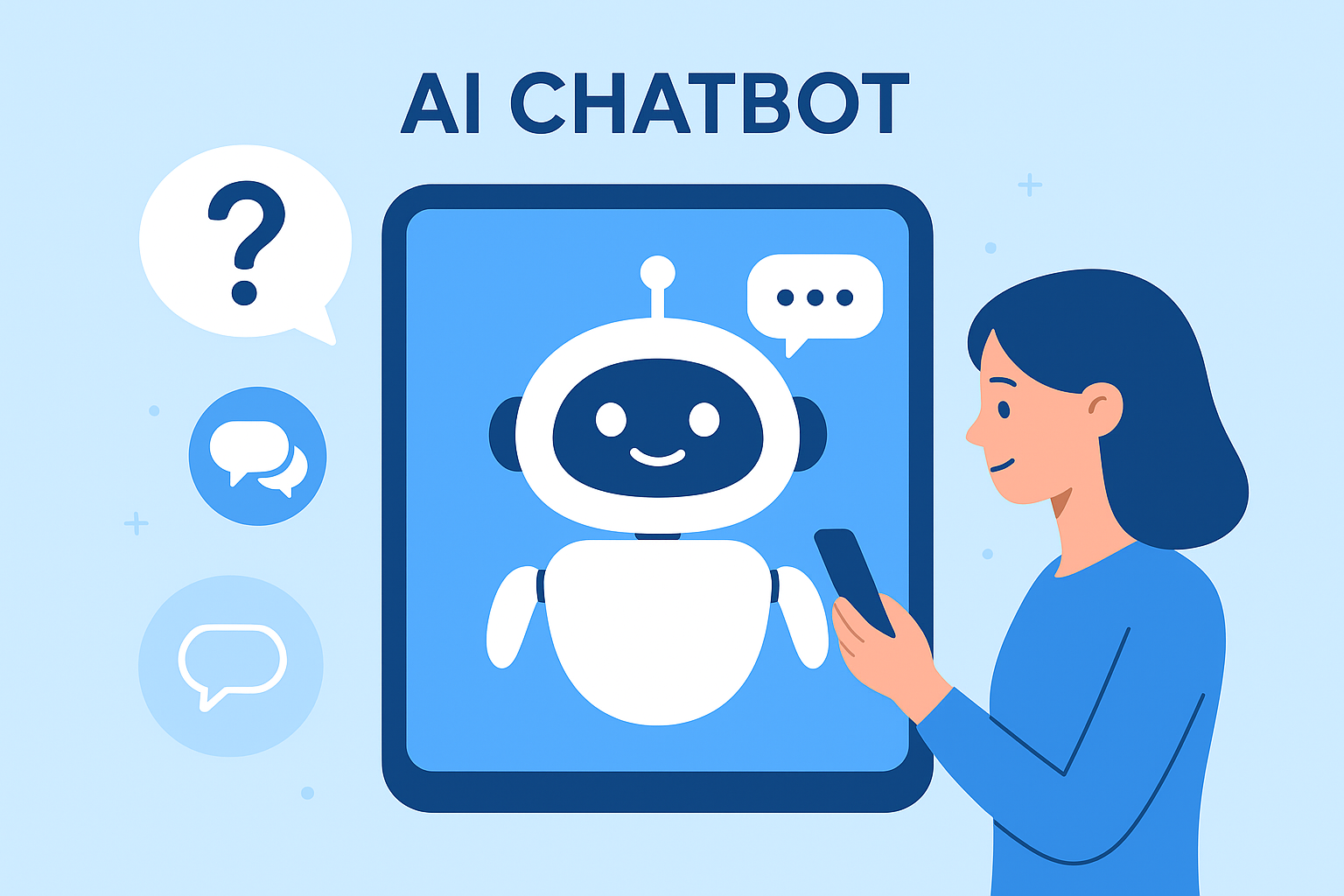
AI chatbot technology is a real revolution in how humans interact with machines, not just a fad. Imagine a tool that never pauses, responds right away, adjusts to your preferences, and gets smarter with each exchange. Today’s virtual chat systems are strong because of this.
The Change in User Expectations
The world of modern users is one of speed and convenience. They anticipate precise responses, personalized assistance, and seamless interactions on social media, websites, and apps. To meet these demands, conversational AI has become the ideal partner, facilitating more effective communication among businesses, educational institutions, and healthcare organizations.
Examining the Future: Why It Is Important
So why is this technology so important? Why is it essential to the future of digital communication? We’ll go into greater detail about these topics in the sections that follow, looking at what AI chatbot technology is, its salient characteristics, practical applications, my own observations, and the potential long-term effects on our day-to-day lives.
An AI Chatbot: What Is It?
An artificial intelligence (AI) chatbot is a computer program that mimics human speech. This technology understands intent, context, and emotions using natural language processing (NLP), machine learning, and deep learning, in contrast to basic rule-based bots that adhere to preset scripts.
AI Chatbot as a Virtual Helper
Imagine it as an intelligent assistant that can respond to consumer inquiries, offer details, suggest fixes, and even have deep discussions. It can interpret sentences, learn from previous interactions, and adjust to various users; it is not just capable of responding to “yes” or “no” questions.
Examples of AI Chatbot Use in the Real World
For instance, when you track an order on an e-commerce site, a conversational AI system can retrieve real-time data from a database and provide immediate updates. A virtual assistant in the medical field can inquire about symptoms and make recommendations for potential next steps.
In short, this technology allows for natural and efficient communication by fusing artificial intelligence and conversation.
Important AI Chatbot Features
AI chatbot solutions stand out in the current technological landscape thanks to a number of remarkable features. Here are a few of the most significant ones:
1. NLP, or natural language processing
AI chatbots can comprehend more than just keywords; they can also understand human language. NLP makes conversations more human-like by enabling them to handle spelling errors, slang, and a variety of sentence structures in addition to interpreting user intent.
2. Capabilities for Machine Learning
AI chatbots get better with time. They can identify the most effective responses, adjust to trends, and deliver better responses with each interaction by examining user interactions.
3. Constant Accessibility
AI chatbots don’t require holidays, breaks, or sleep like humans do. They provide constant support and help across time zones and are always willing to participate.
4. Personalization
AI Chatbots analyze past interactions and data to provide personalized responses. For instance, an e-commerce AI Chatbot can suggest products based on browsing history.
5. Integration Across Channels
AI chatbots can function flawlessly on a variety of platforms, including voice assistants like Google Assistant and Alexa, websites, apps, WhatsApp, and Messenger.
6. The ability to scale
AI chatbots can handle one customer or a million without experiencing any issues. They are therefore perfect for companies that deal with high customer traffic.
7. Economical Effectiveness
AI chatbots automate repetitive tasks, which lowers operating costs. While bots handle routine queries, businesses can reallocate human staff to more complex issues.
8. Reporting and Analytics
Contemporary AI chatbots help businesses improve their services by offering insights into user satisfaction, conversation patterns, and customer behavior.
9. Emotional Intelligence
In order to create sympathetic and human-like communication, sophisticated AI chatbots can recognize tone, sentiment, and mood and adjust their responses accordingly.
10. Constant Updates
AI chatbots, in contrast to static systems, improve with updates, growing in intelligence, speed, and accuracy over time.
AI Chatbot Online
The Rise of AI Chatbot Online Platforms
Chatbots with AI Online platforms are changing the way people use the internet to get help and services. Through a website, mobile app, or social media channel, users can communicate with a chatbot instantly without having to wait for human agents or install bulky software. Anyone with an internet connection can now interact online more quickly, easily, and conveniently.
Why Businesses Choose AI Chatbot Online Solutions
Businesses can be accessible 24/7 without consuming resources by implementing an AI chatbot online. These virtual assistants are adept at performing repetitive tasks, such as providing after-sales support, assisting customers with purchases, and responding to frequently asked questions. Businesses cut expenses while increasing client engagement and satisfaction by doing this.
Examples of AI Chatbot Online in Action
- E-commerce: AI chatbots excel at making product recommendations based on your past purchases or browsing activity. They also facilitate the checkout process and assist you in tracking your orders.
- Education: Chatbots are being used by universities to answer admissions inquiries, disseminate course information, notify students of schedule changes, and offer prompt academic assistance when required.
- Healthcare: Before visiting a doctor, patients can communicate with a bot to explain their symptoms, get basic advice, make appointments, or get medication reminders.
- Banking: Customers no longer need to visit a branch to check their balances, send money, or receive real-time updates on loans or transactions, thanks to AI bots.
The Benefits of Going Online
An AI chatbot on the internet guarantees scalability and flexibility. Because the support is already integrated into the digital spaces users use on a daily basis, they don’t need to download apps or log into multiple systems. Higher engagement rates and the capacity to serve thousands of customers simultaneously without sacrificing quality are what it means for businesses.
NSFW AI Chatbot: Understanding Its Role and Challenges
What Is an NSFW AI Chatbot?
A conversational AI system created to handle content classified as “Not Safe For Work” is known as an NSFW AI Chatbot. These resources are frequently utilized in adult services, entertainment, and forums that permit mature conversation. They are designed to handle delicate subjects with a balance of privacy and personalization, in contrast to general-purpose chat assistants.
Why Do People Use NSFW AI Chatbots?
For company, private chats, or role-playing situations that are difficult for them to experience in public, some users resort to an NSFW AI chatbot. These systems could be used by others for creative or artistic endeavors, like creating characters for safe-environment simulations or stories.
Ethical Considerations Around NSFW AI Chatbots
Important questions are raised by the emergence of NSFW AI chatbots. Concerns like consent, privacy, and responsible use become crucial because they work with sensitive material. Platforms and developers are responsible for making sure these systems are used morally and refrain from promoting abuse or destructive behavior.
The Balance Between Innovation and Responsibility
NSFW AI chatbots demonstrate the versatility of contemporary conversational AI, but they also draw attention to the necessity of setting clear limits. It’s critical to strike a balance between user safety, community norms, and freedom of expression as technology develops. This balance can be attained with the aid of content filters, responsible design, and unambiguous disclaimers.
Google AI Chatbot: Advancing Conversational Technology
What Is Google AI Chatbot?
The Google AI Chatbot, recently branded under names like Bard and now Gemini, is Google’s entry into advanced conversational AI. It’s designed to provide natural, human-like interactions while pulling knowledge from Google’s massive search and data infrastructure. This makes it a powerful assistant for answering questions, creating content, and simplifying daily tasks.
Why Google Developed Its AI Chatbot
With the rise of conversational AI platforms, Google introduced its own chatbot to compete with emerging technologies. The idea was not only to improve search experiences but also to create a smart companion capable of assisting with research, productivity, and creative projects.
Features of Google’s Conversational AI
- Integration with Google Search: Unlike many chatbots, it can directly connect with real-time data.
- Multi-Modal Abilities: It’s designed to handle text, images, and potentially voice inputs for richer interactions.
- Productivity Tools: The chatbot helps draft emails, summarize documents, or brainstorm ideas.
- Cross-Platform Access: Available through the web and mobile, making it widely accessible.
The Future of Google AI Chatbot
Google continues to invest heavily in its AI ecosystem. The chatbot is expected to become more deeply integrated into Google Workspace, Android devices, and search, making everyday tasks smoother for users. As it evolves, it aims to set new standards in both accuracy and user experience.
My Thoughts on AI Chatbot
This technology is, in my opinion, one of the most exciting developments of our time. Chat assistants blend efficiency, speed, and flexibility in ways that are both futuristic and incredibly useful. Compared to conventional human support channels, they frequently offer answers more quickly, save time, and require less effort.
Their capacity for learning and development is what I find most admirable. These digital assistants become smarter with each interaction, enabling them to respond more precisely and manage tasks that get more complicated. This type of flexibility demonstrates the advancements and untapped potential of artificial intelligence.
Context, tone, and humor are not always accurately captured by conversational AI. It can occasionally feel overly robotic or misinterpret subtle requests. However, with improved models and training data, these limitations will only get better.
The ethical aspect is an additional layer that intrigues me. The distinction between human and machine interaction is becoming increasingly hazy due to virtual agents. Should they reveal that they are bots at all times? In delicate industries like healthcare or finance, how much power should they have? These are crucial conversations that need to accompany innovation.
All things considered, I think these intelligent systems will soon be just as necessary as email or smartphones. They will serve as useful partners, assisting us in concentrating on tasks that call for a real human touch, creativity, and decision-making, rather than taking the place of human connection.
Conclusion
AI Chatbot technology is more than an automation tool—it’s a true communication revolution. These systems are transforming the way we interact with technology, serving both individuals who need quick answers and organizations striving for efficiency.
With features such as natural language processing, machine learning, 24/7 availability, and personalization, smart assistants bridge the gap between digital solutions and human expectations. In my view, conversational AI will soon become indispensable across healthcare, education, business, and even everyday personal tasks.
Rather than replacing people, these virtual agents will act as powerful collaborators. By embracing their potential, we gain the chance to save time, increase productivity, and focus more on the work and relationships that truly matter. The sooner we integrate intelligent chat systems into our lives, the more value we will unlock in both personal and professional spaces.
👉 In this rewrite:
FAQs
Q1. What is an AI Chatbot?
A program that uses AI to simulate human conversations through text or voice.
Q2. How does it work?
It uses natural language processing (NLP) and machine learning to understand queries and give relevant answers.
Q3. What are the benefits?
They save time, offer 24/7 support, cut costs, improve customer experience, and handle repetitive tasks.
Q4. Can they replace humans?
No. They handle simple queries well, but complex issues still need human agents.
Q5. Where are they used?
In e-commerce, banking, healthcare, education, customer support, and social media.
Q6. Are they expensive?
Basic ones are affordable. Advanced chatbots with integrations cost more.
Q7. Do they support multiple languages?
Yes, many can interact in several languages for global reach.
Q8. Is data safe?
Trusted platforms use encryption and privacy standards, but security depends on the provider.
Q9. Can they learn over time?
Yes, they improve by learning from past interactions.
Q10. Which industries benefit most?
Top sectors include e-commerce, healthcare, finance, real estate, education, and travel.
Q11. Can they integrate with websites/apps?
Yes, they work with websites, mobile apps, and messaging platforms.
Q12. Rule-based vs. AI Chatbots?
Rule-based follow scripts. AI-powered ones understand natural language and give smarter replies.
Q13. How do they improve satisfaction?
By giving fast, accurate, personalized, and consistent responses.
Q14. Can they be customized?
Yes, businesses can tailor them to their brand and customer needs.
Q15. What’s the future?
They’ll become more human-like with emotional intelligence, voice features, and deeper integration.
tap here to get more information about us



Post Comment