Print on Demand: An In-depth Introduction to Beginning and Making Money Online
What is Print on Demand
The internet has produced a wealth of opportunities for people who want to launch businesses without making a sizable financial commitment. Among all of these options, Print on Demand is among the simplest and most scalable ways to generate income online.
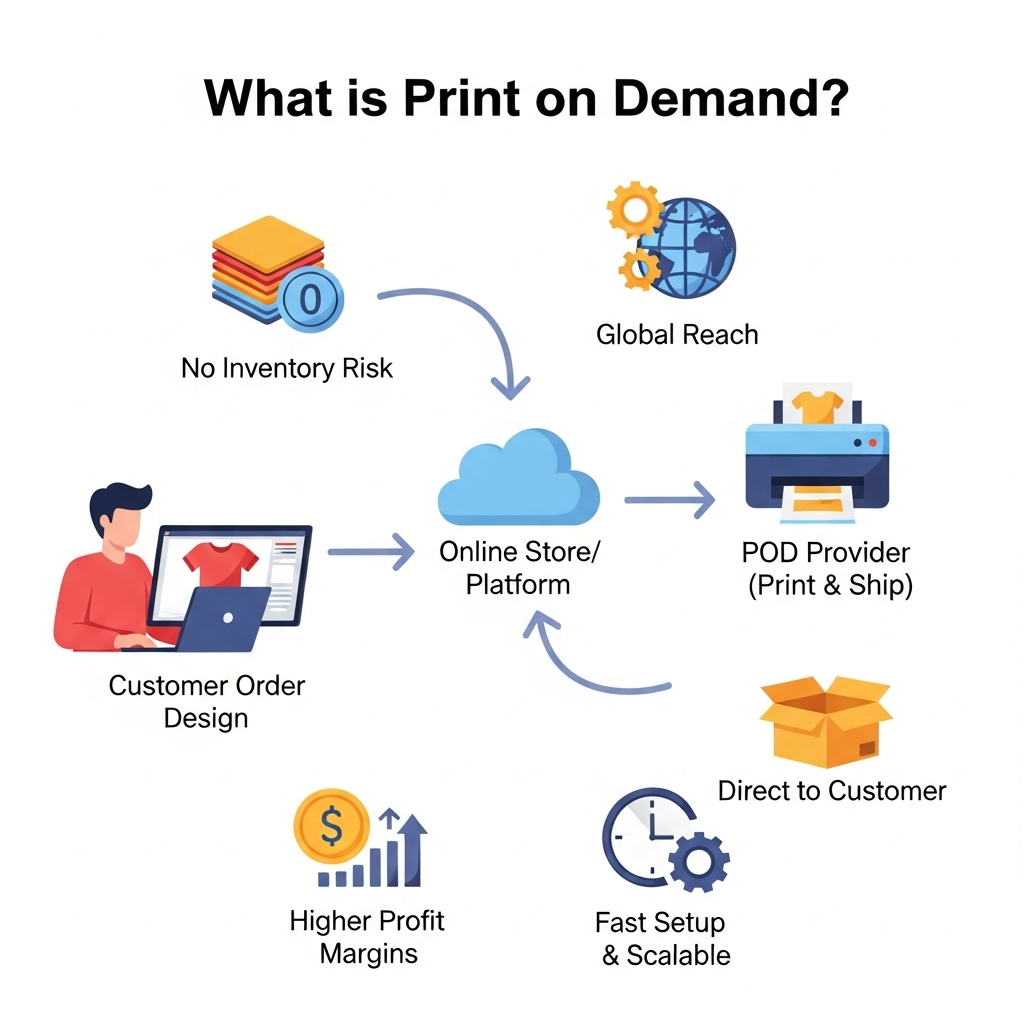
Entrepreneurs can design original products, list them for sale, and only have them printed\ and shipped when a customer places an order under this business model. This reduces startup costs, eliminates the need to stock inventory, and makes it possible for even beginners to start an online business with little financial investment.
Understanding the Print on Demand Business Model
How Print on Demand Works
The way Print on Demand operates is by matching business owners with vendors who manage every technical facet of manufacturing. While the supplier handles printing and delivery, the business owner concentrates on designing and marketing their store. The actual products can be found in a catalog of blank items, including posters, mugs, hoodies, and shirts. When a customer selects one of these items featuring your design, the supplier prints it and sends it straight to the customer.
The Profit System in Print on Demand
The difference between the price you charge the customer and the cost of the blank product plus printing is what you make. For instance, you keep the $10 profit if you make a mug for $5 and sell it for $15.
The beauty of Print on Demand is in volume, even though the margin on individual items might appear small. You can sell hundreds or even thousands of products each month with effective marketing.
Why Print on Demand Works in Today’s Market
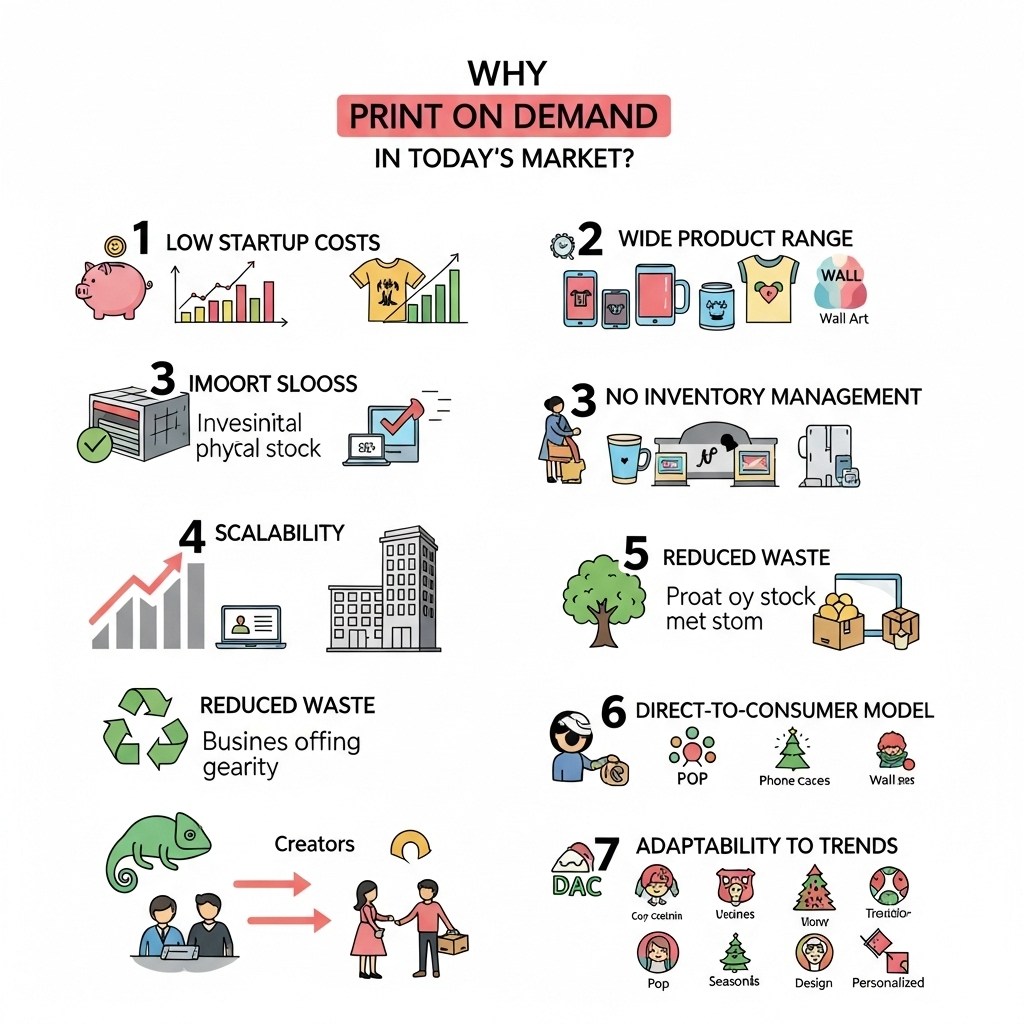
The Need for Customization
Today’s consumers desire goods that reflect their individuality. They now seek out products that reflect their humor, values, and passions rather than settling for generic mass-market designs.
For instance, a coffee lover might be drawn to a mug with a distinctive design, while a dog lover might want a hoodie with a humorous breed-specific slogan. By enabling business owners to create designs that appeal to a wide range of communities and subcultures, Print on Demand capitalizes on this trend.
The Rise of E-Commerce and Social Media
With billions of customers shopping online, e-commerce keeps expanding annually. Because social media platforms facilitate direct communication between businesses and their target audiences, they are crucial in fostering this growth.
Entrepreneurs can creatively display their designs and even create viral success with visually stimulating platforms like Instagram and TikTok. When paired with Print on Demand fulfillment services, this results in a smooth business model that combines innovation and technology.
Benefits of Starting a Print on Demand Business
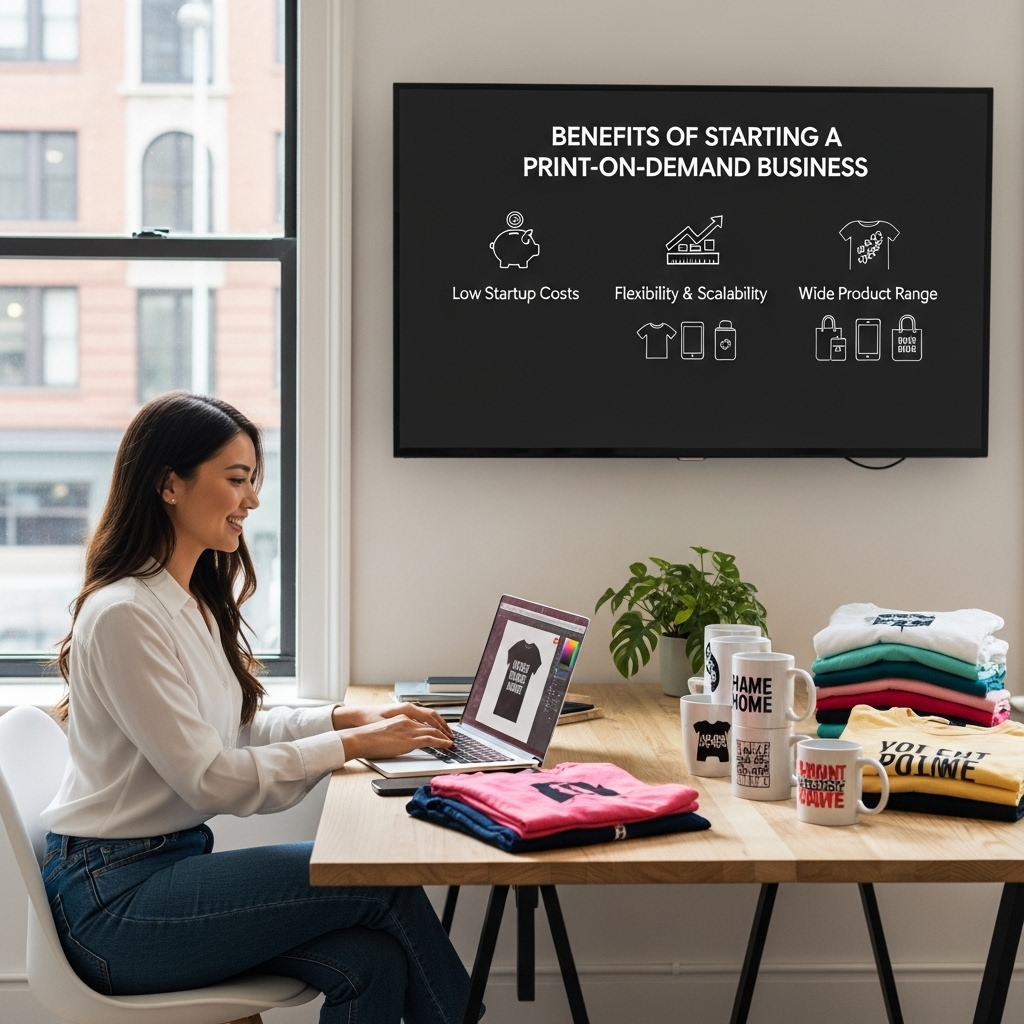
Low Startup Costs Compared to Traditional Retail
Conventional product-based companies frequently need a large initial outlay of funds for logistics, inventory, and manufacturing. This cost obstacle is eliminated with Print on Demand.
Since products are only made after a sale, you can start with nearly no money. Because of this, Print on Demand is one of the most user-friendly online businesses and lowers risk.
Freedom from Inventory and Shipping Concerns
Managing storage, packaging, and delivery is a daunting task for traditional businesses. Suppliers handle these procedures for you in POD. In addition to saving money, this frees up your time so you can concentrate on marketing, branding, and growing your store.
Wide Variety of Products to Sell
A vast catalog of customizable items is available through Print on Demand. You can look at stationery, phone cases, tote bags, home décor, and even shoes in addition to T-shirts and mugs. You can experiment with different product categories and niches until you find what sells the best, thanks to this variety.
Scalability of the Business Model
Because Print on Demand businesses are not constrained by inventory, they can grow with ease. You can swiftly grow through marketing campaigns, partnerships, and new product variations once you find a profitable design. Whether you sell ten products or ten thousand, the supplier takes care of fulfillment.
Location Independence and Flexibility
Because print-on-demand companies are fully online, you can run them from any location in the world. As long as you have internet access, your store will continue to operate whether you are working from home, traveling, or living overseas. One of POD’s most alluring features for digital entrepreneurs is its flexibility.
Popular Products in Print on Demand
Apparel as a Constantly Profitable Category
Due to their constant demand, t-shirts and hoodies form the basis of the majority of POD businesses. Fashion never goes out of style, and people are always searching for clothes that express their individuality or make them stand out.
Clothing that caters to a certain niche, like designs for gamers, fitness enthusiasts, or pet owners, usually does very well.
Accessories and Lifestyle Products That Sell Well
Smaller lifestyle items like tote bags, phone cases, and mugs are very profitable in addition to apparel. Customers can easily feature unique or customized designs, and they are reasonably priced. These goods also make wonderful presents, which increases their year-round market potential.
Home Décor and Creative Items in Demand
Another area where Print on Demand excels is in home décor. Customers can add a personal touch to their living spaces by decorating them with pillows, wall art, and posters.
The demand for these products keeps increasing as a result of the growing interest in interior design on websites like Pinterest and Instagram.
Seasonal and Limited Edition Products
For entrepreneurs, seasonal POD products present a substantial opportunity. Holiday-themed products, like those for Christmas, Valentine’s Day, or Halloween, typically sell well. Additionally, limited edition designs instill a sense of urgency in customers, urging them to buy before the item sells out.
Choosing the Right Print on Demand Platform
Marketplace Platforms like Redbubble and Teespring
Because marketplaces already have traffic, they are easy for beginners to use. You can begin selling without setting up your own store by submitting your designs to websites like Redbubble or Teespring. But getting noticed among thousands of other sellers is a challenge.
POD Integrations with Shopify and WooCommerce
Building your own store on Shopify or WooCommerce is a better choice if you want greater control over your company and brand. These platforms easily integrate with POD services like Printful and Printify, enabling you to give clients a branded experience.
Printful vs Printify: Key Differences to Consider
Because of its reputation for producing high-quality goods and offering dependable shipping, Printful is a great choice for business owners looking to establish luxury brands. Conversely, Printify provides a larger network of suppliers, which frequently leads to more varied products and cheaper base costs. Whether you value price or quality will determine which option you choose.
Selling on Etsy with POD Suppliers
Etsy is a distinctive marketplace that offers bespoke, artistic, and handcrafted goods. Because its audience already appreciates original, imaginative products, it is a great platform for print-on-demand. You can combine the marketplace’s inherent traffic with the supplier’s efficiency by integrating POD services with Etsy.
How to Earn Through Print on Demand
Selling Through Your Own Branded Store
You have the most control over your pricing, marketing, and customer experience when you own your own branded store. You can cultivate repeat business and foster customer loyalty by establishing a strong brand identity.
Leveraging Marketplaces for Passive Sales
Marketplaces like Redbubble or Amazon Merch provide passive income options for individuals looking for a more straightforward strategy. Creative and niche-specific designs can consistently produce sales even in the face of intense competition.
Driving Sales with Social Media Marketing
One of the most effective platforms for POD product promotion is social media. You can interact directly with your audience while showcasing your products in unique ways on platforms like Instagram and TikTok. Storytelling, creative reels, and viral content can all significantly increase sales.
Using Paid Advertising to Reach Target Audiences
You can target particular demographics, interests, and behaviors with paid advertising on Facebook, Instagram, and TikTok. You can reach potential customers who are most likely to buy your products with well-optimized advertising campaigns.
Capitalizing on Trends and Viral Designs
Staying updated with current trends can lead to big wins in POD. Designs based on viral memes, trending phrases, or cultural moments often generate a surge in sales. Timing is crucial, so being quick to launch designs around trends can set you apart.
Partnering with Influencers and Collaborators
Collaborating with influencers who share your niche allows you to tap into their established audiences. Influencers can promote your products through authentic endorsements, increasing both brand awareness and sales.
Building a Brand Around Your POD Business
Why Branding Matters for Long-Term Success
Without a brand, POD stores risk becoming just another generic shop. Branding builds recognition, trust, and emotional connection with your audience, which is essential for long-term success.
Developing a Consistent Visual Identity
A strong brand requires consistency in logo design, colors, fonts, and overall style. A visually cohesive brand not only looks professional but also helps customers remember you.
Creating an Engaging Customer Experience
From browsing your store to receiving their package, every customer interaction should feel memorable. Adding branded packaging, personalized thank-you notes, or loyalty discounts can improve customer experience significantly.
Building Trust and Loyalty with Repeat Buyers
Repeat buyers are the foundation of sustainable businesses. By delivering high-quality products, excellent service, and consistent branding, you increase the likelihood of customers returning to purchase again.
Marketing Strategies for Print on Demand Success
Content Marketing and Blogging for Organic Reach
Writing blogs, creating guides, and sharing design inspiration related to your niche can help drive organic traffic to your store. Content marketing positions you as an authority while building trust with potential buyers.
Email Marketing for Customer Retention
Email lists are powerful assets for any POD business. Sending newsletters with product launches, discounts, and personalized recommendations keeps your audience engaged and encourages repeat purchases.
TikTok and Instagram Reels for Viral Growth
Short-form video content is one of the fastest ways to reach large audiences today. Showcasing your POD products in fun, creative videos can lead to virality and drive huge spikes in sales.
Pinterest for Visual Product Discovery
Pinterest functions similarly to a visual search engine. Since pins frequently stay active for months or even years, you can increase long-term traffic to your store by posting visually appealing product photos.
SEO for Your Online Store
Your products will show up in Google searches thanks to search engine optimization. The proper use of keywords in product titles, descriptions, and blogs boosts exposure and draws in natural customers.
Challenges in Print on Demand and How to Overcome Them
Standing Out in a Competitive Market
Niching down is the answer to the crowded POD market. Focus on underserved interests or smaller communities rather than general categories.
Dealing with Thin Profit Margins
POD typically has lower profit margins than traditional retail. By strategically setting prices, upselling, and emphasizing higher-value items, you can get around this.
Maintaining Product Quality and Customer Satisfaction
You have little control over the quality of your products because you depend on suppliers. Prior to selling to customers, quality can be ensured by selecting trustworthy partners and placing test product orders.
Managing Delivery Times and Expectations
When compared to retail behemoths like Amazon, POD delivery can occasionally be slower. Providing tracking information and establishing clear expectations on your website will help you keep customers’ trust.
The Future of Print on Demand
Growing Demand for Personalized Products
The trend of personalization is still very popular. Customers are increasingly asking for names, dates, and personalized artwork on their purchases, which presents a huge opportunity for POD businesses.
The Role of AI in Design and Marketing
Design creation is becoming faster and more efficient thanks to AI tools. Entrepreneurs now have a competitive advantage thanks to artificial intelligence, which allows them to create mockups, artwork, and even trend forecasts.
Sustainability Trends in Print on Demand
Customers are growing more environmentally conscious. In the years to come, POD suppliers that provide ethical business practices and sustainable materials are probably going to gain more traction.
Opportunities for Niche-Focused Stores
The performance of niche stores continues to surpass that of generic ones. Entrepreneurs who focus on niche markets or topics have a higher chance of creating devoted clientele and steady revenue streams.
Conclusion
Why Print on Demand Fits 2025
One of the easiest and most effective ways to begin making money online in 2025 is through Print on Demand. It offers entrepreneurs a unique opportunity to create lasting businesses with low startup costs, minimal risks, and endless creative opportunities.
The Role of Creativity in POD
Unlike traditional business models, POD allows you to focus on design and creativity while suppliers manage printing and shipping. Your imagination becomes the foundation of your income.
Knowing and Targeting Your Audience
The most successful POD businesses are built on understanding their audience. You need to identify what resonates—whether it’s motivational messages, cultural humor, or stylish graphics—and tailor your products to meet those expectations.
Building a Niche for Long-Term Success
Random designs rarely work in POD. Success comes from finding a niche, focusing on it, and consistently creating designs that speak to that community.
Picking the Best Platforms
Etsy, Redbubble, and Amazon Merch provide instant access to built-in audiences, while Shopify gives you full control to build a brand. Choosing between marketplaces and independent stores depends on your goals and resources.
The Power of Branding in POD
Branding helps transform your store from “just another seller” into a trusted name. A clear logo, unique tone, and consistent visuals create recognition and customer loyalty.
Mastering Marketing Strategies
Marketing is the backbone of Print on Demand. Social media platforms like Instagram, TikTok, and Pinterest allow free exposure, while paid ads and influencer partnerships help scale faster. Email marketing ensures customers keep returning.
Staying Ahead of Competition
Competition is increasing, but POD continues to thrive because of growing demand for personalized and unique products. Businesses that innovate and keep up with trends maintain their edge.
The Future of Print on Demand
The POD industry is expected to grow even more with AI-powered design tools, environmentally friendly printing choices, and quicker shipping networks. The greatest advantages will accrue to entrepreneurs who adjust early.
Final Thoughts and Call to Action
Print on Demand is more than just a company; it’s a way of life that promotes independence, creativity, and freedom. POD can assist you in creating a revenue stream that will expand with you and beyond if you are dependable, creative, and open to new ideas. Now is the ideal moment to begin.
tap here to get more information about us



Post Comment